Create Campaign for Google Ads Lead Form Audience
Learn how to set up and launch a voice campaign using Google Ads Lead Forms as your audience source. This guide covers integration, campaign configuration, lead capture, and real-time analytics.
This guide explains how to create a campaign using Google Ads Lead Form as your audience source. Integrating Google Ads allows you to automatically capture leads from your Google ad forms and engage them through your campaign workflows.
1. Integrate Google Ads Lead Form
- Navigate to the Integrations page from the main dashboard.
- Click on the Google Lead Form Ad option or card.
- Fill in the required Google Ads configuration:
- App ID (optional): Your Google Ads App ID.
- App Secret (optional): Your Google Ads App Secret.
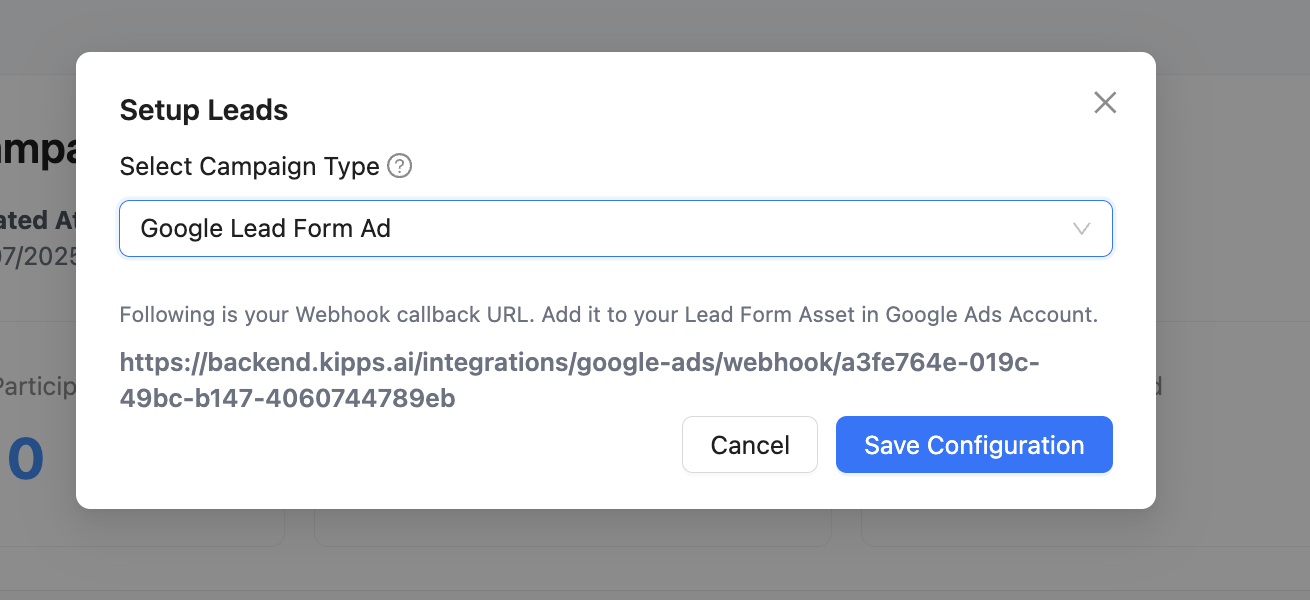
- After setup, you will receive a Webhook Callback URL.
- Copy this Webhook URL and add it to your Google Ads Lead Form Asset as the webhook destination.
- (Optional) Set up field mapping for phone number and name if prompted.
2. Start Creating a Campaign
- Go to the Campaign tab.
- Click Add Campaign or + Create Campaign.
3. Fill Campaign Details
- Campaign Name: Enter a descriptive name.
- Description: Add details about the campaign’s purpose.
- Duration: Set how many days the campaign should run.
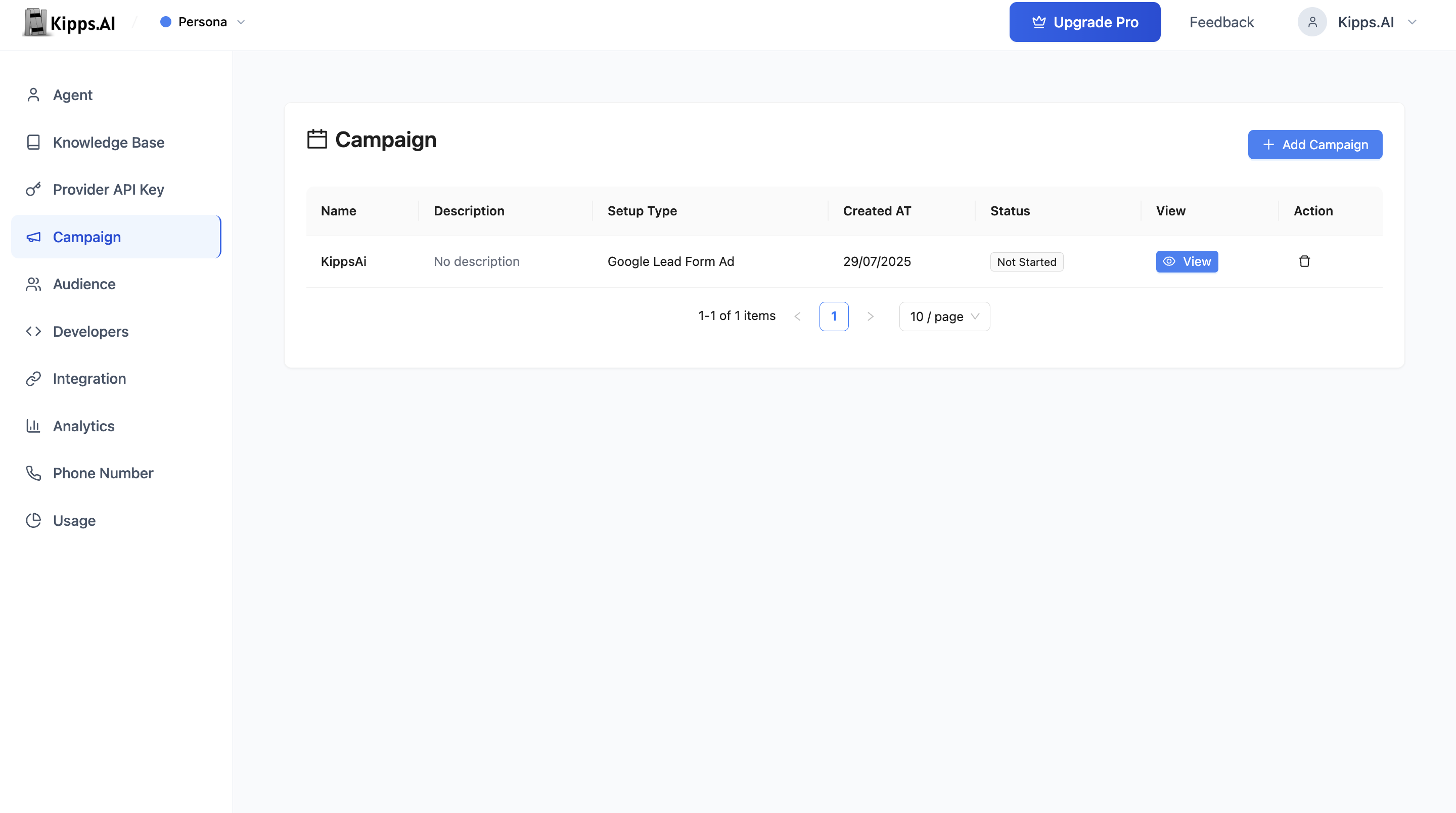
4. Select Setup Type as Google Lead Form Ad
- In the Setup Type or Audience Source field, select Google Lead Form Ad from the dropdown.
- This configures the campaign to use Google Ads leads as the audience.
5. Configure Campaign Settings
- Select Voice Agent: Choose the AI voicebot that will make the calls (for voice campaigns).
- Initial Message: Set the opening message the bot will deliver.
- System Prompt (optional): Provide specific instructions for the bot’s behavior.
- Lead Qualification Prompt: Define how the bot should qualify leads.
- Lead Qualification Params: Add custom fields like
Interested,Budget, etc.
6. Review and Launch
- Review all campaign settings.
- Click Create to save the campaign.
- Once setup is complete, start the campaign from the campaign list.
Features
- Automatic Lead Capture: Google Ads leads are fetched in real-time and used as campaign audiences.
- Webhook Integration: Seamless syncing via Google’s webhook infrastructure.
- No Manual Uploads: Eliminate the need for CSV imports.
- AI Voicebot Integration: Use intelligent bots for automated, human-like conversations.
- Custom Prompts: Tailor your message and lead qualification strategy.
- Lead Qualification: Tag and qualify leads based on their interaction.
- Analytics: View delivery, response, and conversion metrics live.
- Downloadable Reports: Export leads and results in CSV format.
- Status Tracking: Monitor campaign progress (Not Started, Ongoing, Completed).
Monitoring and Managing Campaigns
View Campaign Status and Analytics
- Get real-time stats: total participants, contacted, replied, failed, and conversions.
Download Lead Data and Call Transcripts
- Export call results for deeper analysis.
Drill Down into Each Lead
- View details like call status, lead responses, and qualification parameters.
Tip:
You can revisit the Google Lead Form Ad integration anytime to update webhook settings, change credentials, or troubleshoot syncing issues.
Troubleshooting
Google Ads leads are submitting forms but WhatsApp messages are not being delivered. Verify the Webhook Callback URL is correctly added to your Google Lead Form Asset in Google Ads. Also confirm the WhatsApp Business number linked to the campaign is active and the Meta-approved template used is not rejected. Check the campaign's delivery log for error codes.
The WhatsApp campaign shows participants but the contacted count stays at 0. Ensure the campaign is in "On Going" status and the WhatsApp agent is selected. Also verify that your messaging tier (in Meta Business Manager) allows the number of messages you are attempting to send per day.
Test lead submissions work but live form submissions don't trigger WhatsApp messages. Google's test webhook and live submissions behave differently. Confirm the lead form is actively serving in a live Google Ads campaign—forms in draft or paused state do not send live webhook events.
Frequently Asked Questions
What is the key difference between using Google Ads leads for WhatsApp vs. Voice campaigns? Both campaign types use the same Google Lead Form integration. WhatsApp campaigns send structured messages (text, template, or media) via WhatsApp, making them ideal for sharing links, documents, or confirmations. Voice campaigns place phone calls for direct, real-time conversations.
Do WhatsApp messages sent to Google Ads leads require pre-approved templates? Yes. Since these are new outbound messages to leads who have not recently messaged you, they fall outside the 24-hour session window. Meta-approved templates are required for all outbound WhatsApp campaign messages.
Can I personalize WhatsApp messages with data from the Google lead form?
Yes. Google Lead Forms capture fields like name, phone number, email, and custom questions. Map these to your WhatsApp template variables to personalize each message (e.g., "Hi {{name}}, thanks for your interest in {{product}}.").
How quickly are Google Ads leads contacted after submitting the form? Google sends webhook notifications in near real-time. Kipps.AI processes the webhook and queues the WhatsApp message within seconds, allowing you to contact leads within minutes of their form submission.
Can the same Google Ads integration be reused for multiple WhatsApp campaigns? Yes. Once configured, the Google Lead Form integration can be selected as the audience source for multiple campaigns without reconfiguring the webhook.