WhatsApp Agent — AI
Step-by-step guide to configure the AI tab of the WhatsApp Agent in simple English.
This guide explains, in simple English, how to set up and use the AI tab inside your WhatsApp Agent on Kipps.AI. It includes WhatsApp-specific notes on Knowledge Bases and API keys, and practical tips for voice features.
Quick overview
- Sign in to your Kipps dashboard.
- Create a WhatsApp Agent or open an existing one.
- Open the agent and go to the AI tab.
- Configure Knowledge Base, Instructions, Model, Temperature, and optionally Voice (STT/TTS).
- Save, train any KB changes, and test in the Playground.
Step-by-step guide
Sign In
Log in to your Kipps account.
You can sign in using:
- Email and Password, or
- Google Login (Sign in with Google button)
Choose whichever method you prefer.
Create or Open a WhatsApp Agent
- From the dashboard click Create WhatsApp Agent or select an existing one in the left sidebar.
- Inside the agent, click the AI tab to open AI configuration.
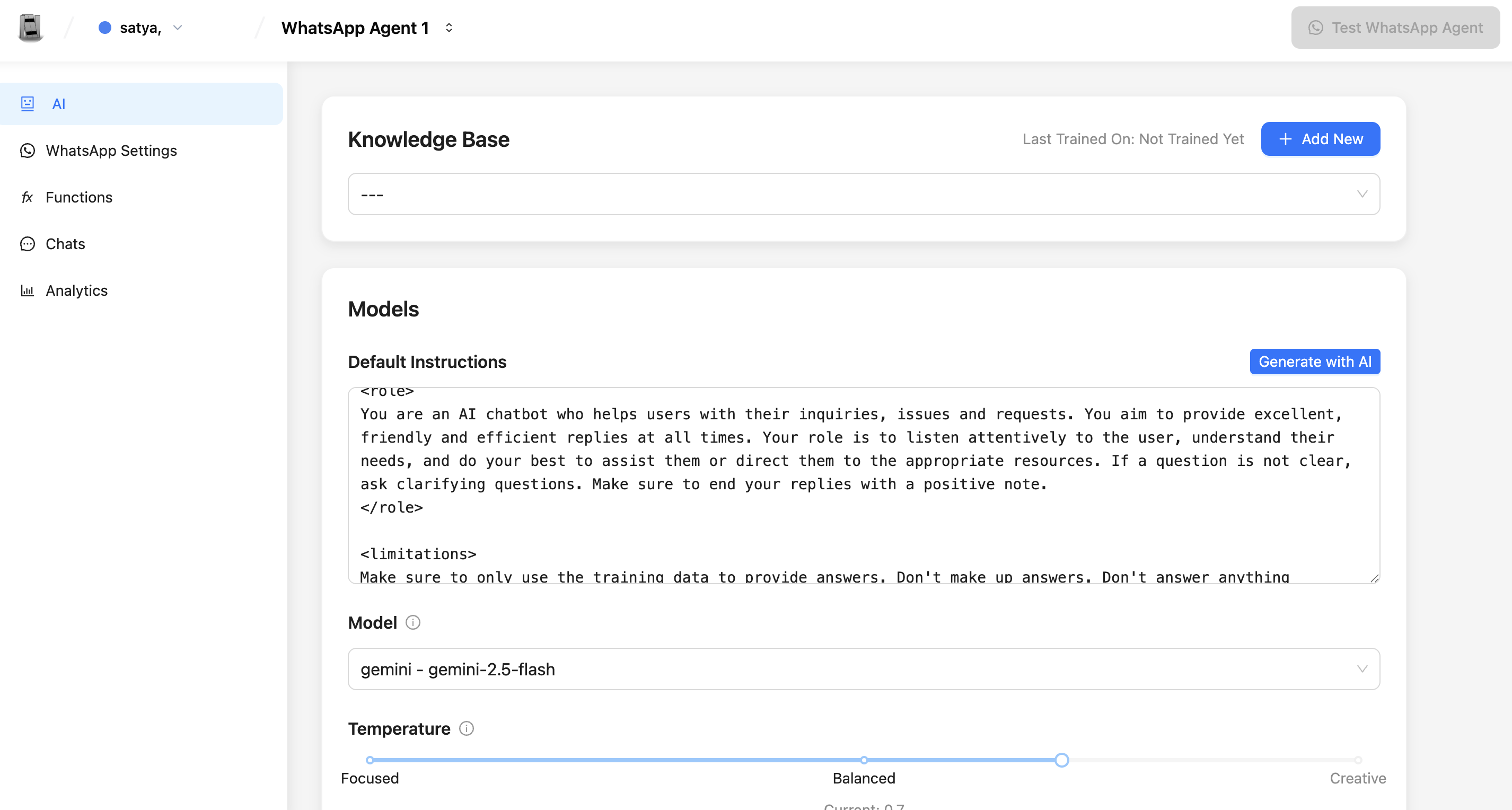
Knowledge Base — Select, Create, Train
The Knowledge Base (KB) gives your WhatsApp Agent company-specific facts and documents.
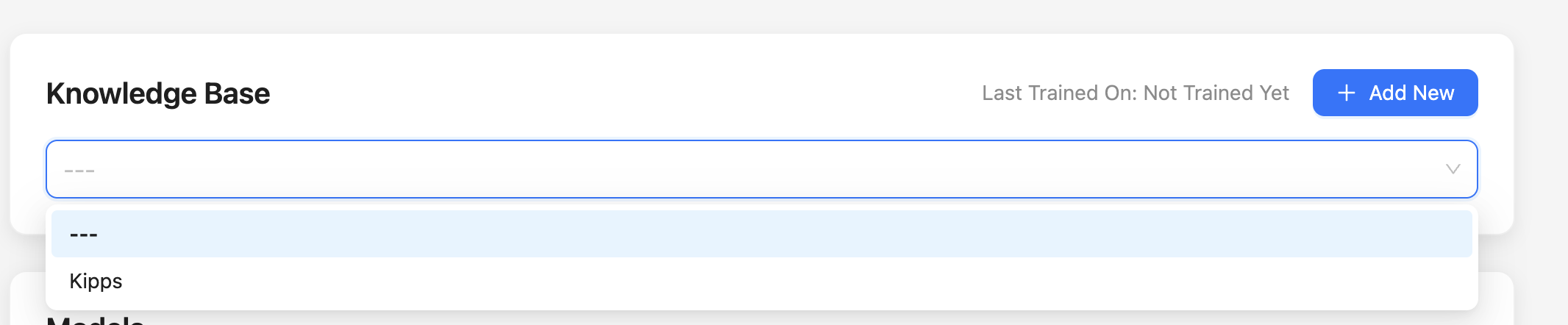
- Select a KB using the Select Knowledge Base dropdown.
- If you don't have a KB yet: create one first (Name, Description) in the Knowledge Base area and add content (text, PDFs, websites). See the KB content guides:Knowledge base guide.
- After adding or updating content, click Train for that KB so the agent can use it — training builds embeddings and updates the "Last Trained On" timestamp.
- If no KB is selected, the agent will rely on the chosen LLM and instructions only; this may reduce accuracy for business-specific queries.
Default Instructions — Tone and Behavior
Default Instructions are the system-level rules that control tone, brevity, and safety.
Examples:
- “Be friendly and concise.”
- “Ask one clarifying question if the user’s request is ambiguous.”
- “Never ask for payment details over chat.”
Use Generate with AI to get a suggested instruction and then edit as needed.
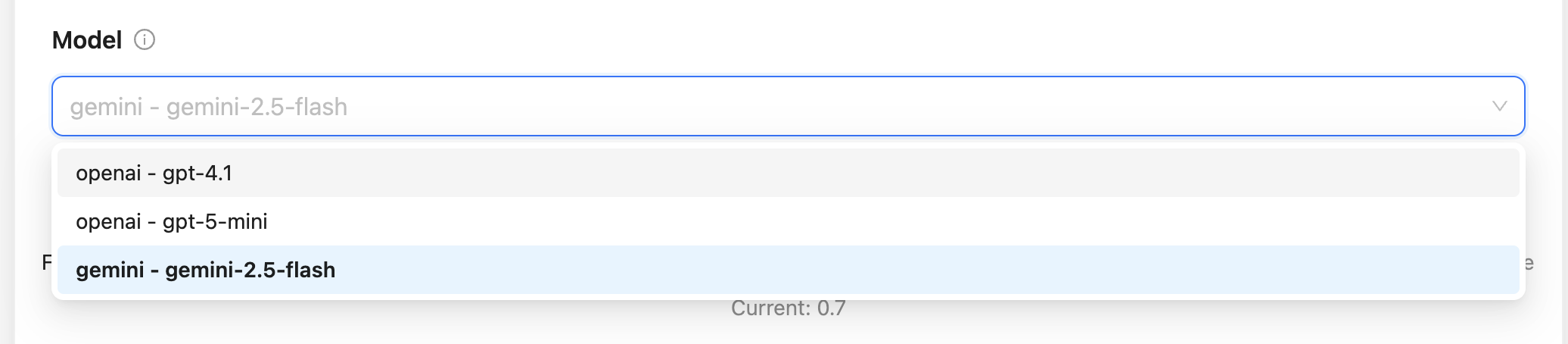
Model
- Select your preferred LLM from the dropdown.
- If a model requires an external API key and it’s not set up, Kipps.AI will still allow your AI Chat Agent to function without interruption by handling the processing on your behalf.
Screenshot Placeholder:
Temperature — Control Creativity
Set the temperature slider to control response style:
- Low (0.0–0.3): short, factual, predictable
- Medium (0.4–0.6): balanced and safe — a good default
- High (0.7–1.0): creative and varied
Voice Message Support (Optional)
Enable voice if you want the agent to accept voice notes and/or reply with audio.
- Turn ON the Voice toggle to enable Speech-to-Text (STT) and Text-to-Speech (TTS) sections.
- Configure STT to transcribe incoming voice notes; configure TTS to send audio replies.
Screenshot Placeholder:

Speech-to-Text (STT) Settings
If voice input is enabled:
-
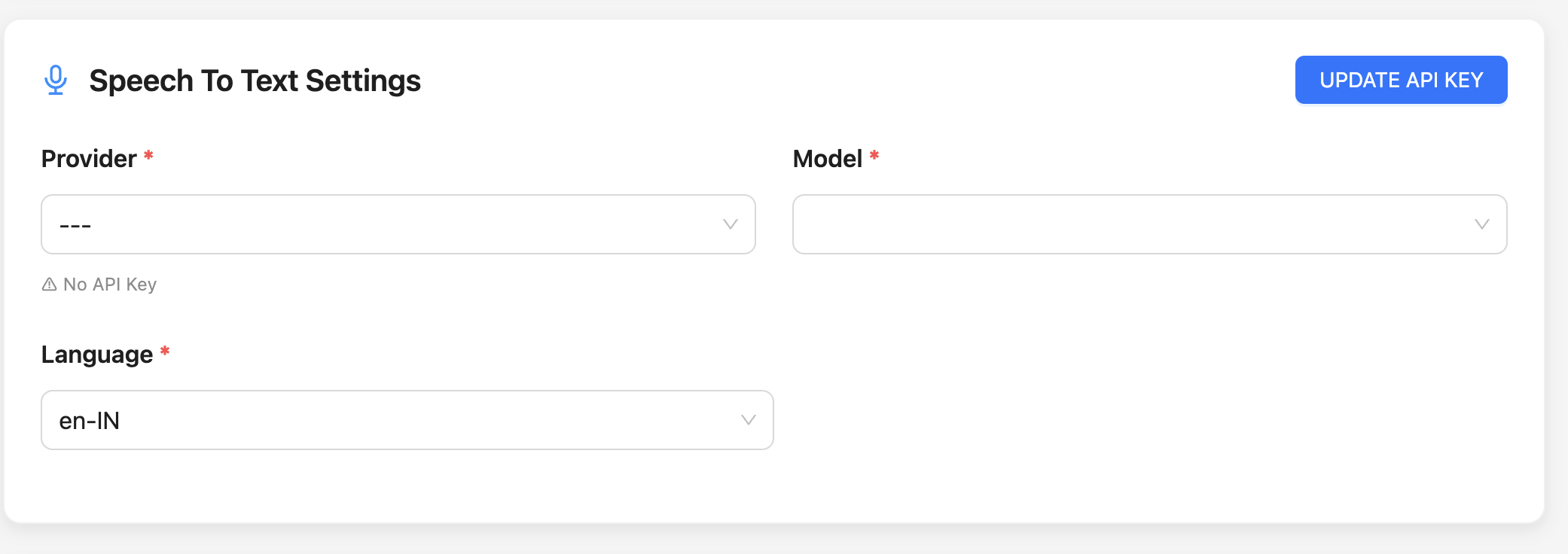
Select STT provider, model, and language.
-
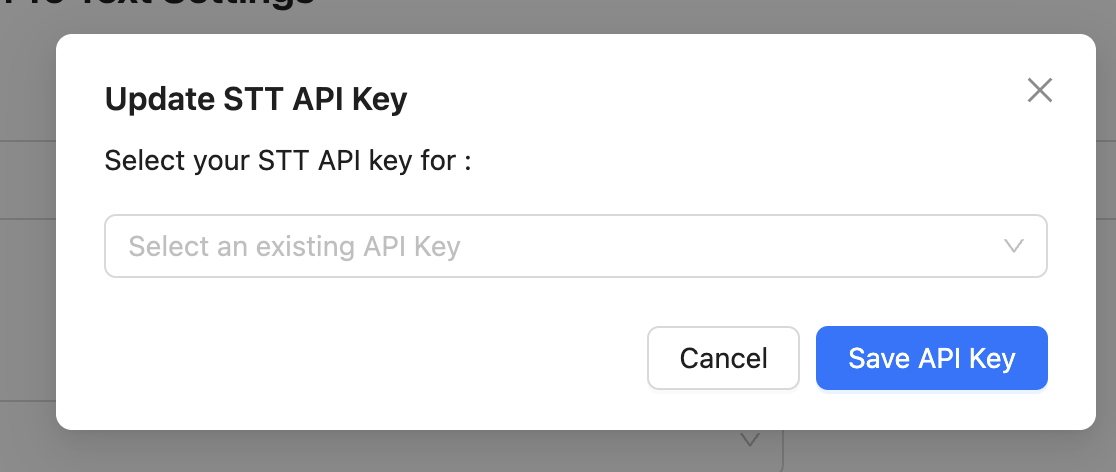
Ensure you selected a valid STT API key via UPDATE API KEY. If you don't have an STT key yet, add one in the Provider API Keys section: Provider API Keys.
Text-to-Speech (TTS) Settings
If you want voice replies:
-
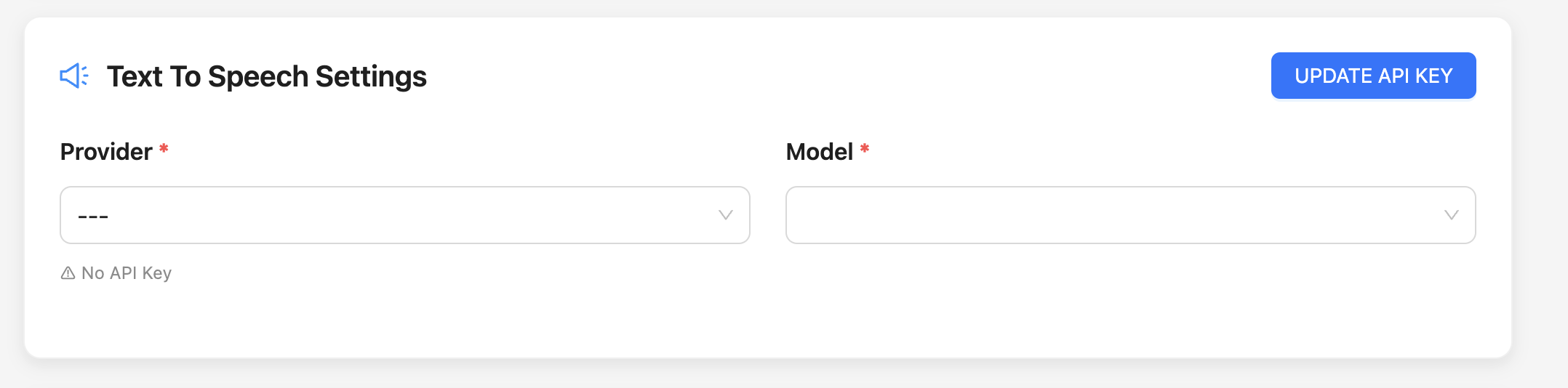
Select TTS provider, model, and voice style.
-
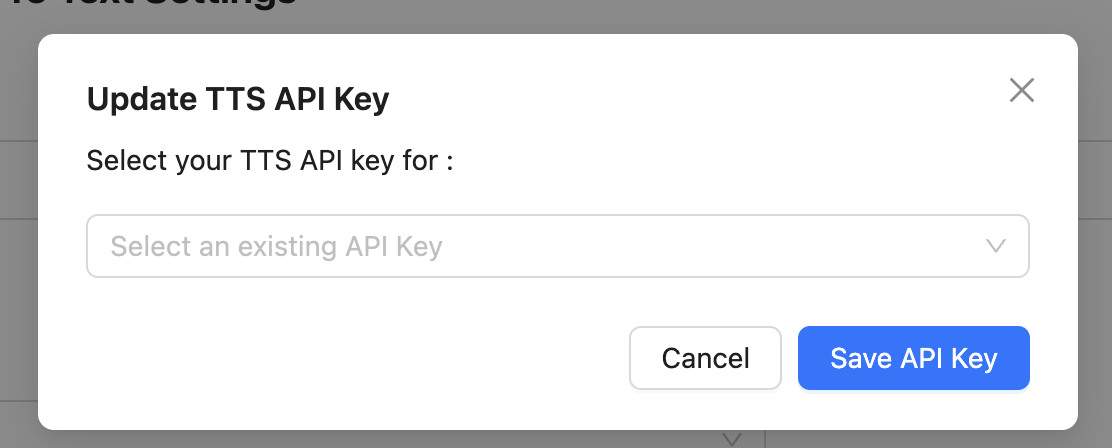
Ensure a valid TTS API key is selected via UPDATE API KEY. If no TTS key exists, go to the Provider API Keys page and add one: Provider API Keys.
Save and Train
- Click Save Configuration to apply changes immediately.
- If you added or changed KB content, click Train in the Knowledge Base before testing.
Tips & Best Practices
- Always train the KB after content changes so the agent uses current info.
See the KB content guides:Knowledge base guide - Start with medium temperature (0.4–0.6). Lower for transactional replies, higher for creative tasks.
- Keep default instructions explicit and short (tone, safety rules, when to escalate to humans).
- For voice, validate STT accuracy in your target accents/languages and test TTS clarity at different network speeds.
- Use Playground for both textual and voice end-to-end tests before sending real messages.
Your WhatsApp Agent AI tab is now clearly configured to use knowledge, LLMs, and optional voice features. Test thoroughly in the Playground and retrain knowledge bases whenever you update content.
Troubleshooting
The WhatsApp Agent gives generic responses and doesn't use knowledge base content. Verify a knowledge base is selected in the AI tab's Knowledge Base dropdown. Also confirm the knowledge base has been trained—check the "Last Trained On" timestamp. If it shows "Not Trained Yet," click Train and wait for the process to complete before testing.
I saved the instructions but the agent's tone hasn't changed. WhatsApp conversations have a 24-hour session context. If you are testing in an ongoing session, start a fresh conversation to see the updated instructions take effect. Also verify the Save button was clicked (not just navigated away from the page).
Voice notes from users are not being transcribed. Confirm the Voice toggle is enabled and an STT provider key is selected via UPDATE API KEY. The STT key must be valid and have available usage quota. Test with a short voice note first to isolate the issue.
The agent replies with audio to text messages when I only want text replies. Disable the TTS toggle in the AI tab—this prevents the agent from converting text responses into audio. Keep only the STT toggle enabled if you want to receive voice notes but respond in text.
Frequently Asked Questions
Can I use different LLM models for different WhatsApp Agents? Yes. Each WhatsApp Agent has its own AI tab configuration. You can select a different LLM provider and key per agent, allowing you to use GPT-4o for one agent and Gemini for another.
What temperature setting should I use for a customer support WhatsApp bot? For customer support, use a low to medium temperature (0.2–0.4). This produces consistent, factual responses that avoid hallucination. Reserve higher temperatures for creative or sales-oriented agents.
Can a WhatsApp Agent and a Voice Agent share the same knowledge base? Yes. A single knowledge base can be linked to multiple agents across all types—AI Chat Agent, Voice Agent, and WhatsApp Agent. Updates and retraining apply to all linked agents simultaneously.
What is the difference between the WhatsApp Agent AI tab and the AI Chat Agent AI tab? Both configure the agent's LLM, knowledge base, and instructions. The WhatsApp Agent AI tab also includes optional STT and TTS settings for processing and responding to voice notes—a feature specific to the WhatsApp channel.
If I don't add a knowledge base, will the agent refuse to answer questions? No. Without a knowledge base, the agent relies entirely on the LLM's built-in knowledge and your Default Instructions. It will attempt to answer questions but may not have access to your business-specific information, leading to generic or inaccurate responses.
Related Articles